
People are not symbols: soul & self-ness in street photography

Now I get why a lot of street photography feels off to me…
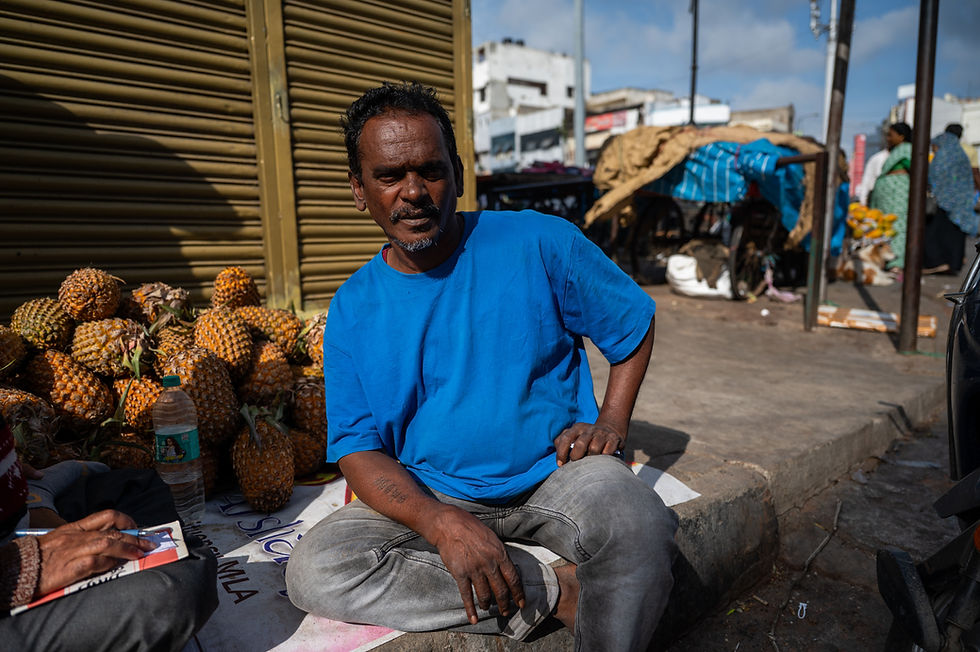
I’ve felt this for a long time but could never quite point to it. In much of street photography, and photography in general, there was something I didn't like. Something felt off specifically about street portraits and photos that concentrate on one person in the frame. It’s not exactly disingenuous but a slight lack of sincerity.
UNIVERSES
People are walking universes. And it’s hard to get to know a universe, especially in a momentary glance on a busy street. What I think photographers specifically give us is the chance to meet a universe without doing any of the work. I get the aesthetic choice for using people as symbols in photography. I get the rationale behind wanting a teenage girl to symbolize all teenage girls or an American soldier to represent all American soldiers. But I also realize what’s lost when an artist makes the choice to use a person instead of seeing them. The sentiment that comes across in representative artwork feels less than what I feel and experience when I see a picture where the person has been seen and valued as an individual by the photographer.The individual. That’s who I'm talking about here. I am interested in individuals. Not people as symbols. Or people as generalizations. Not even people as a whole. I want to know that a person (the photographer) cared about this individual in the photograph. Not the person “as they relate to their nation” or their politics or their economic position. I want to know that the photographer, like any poet or philosopher or empath, sees beyond all that extra info and sees the person before them.
I’ve written before that photography is all about love. Love for people. Love for animals. Love for the planet. Whether you identify it as love or not when you’re taking the photo, or looking at one, it is a deep love for your subject that pulls you to take the photo or to enjoy a picture. Even if you’re taking a picture of someone you strongly disagree with or even loathe, the depth of the photo is in the deep love (synonymous to me with respect) you have for that person.
We are defined by what and how we love, not what we make or do.
ASSIGNMENT SHOOTS VS VISUAL STORYTELLING
Often what I’ve noticed is that photographers who are on assignment have a confidence and directness in looking and seeing since they are backed by a publication or their own project explanation. They are looking for something particular...a story to tell…to have a critical lens on whatever it is they are seeing and researching with their camera and the photos they create. The street photographers with a more traditional documentary approach without a specific project (capture AIDS epidemic in NYC in 1990s; convey how poverty affects West Virginians) non-project based works in my understanding/belief yield more intimate and telling portraits of a people in their time.
VISUALS
I’d like to offer some examples so that I can share examples of what I mean. I’m using photos from the late 20th century so that we know there's a body of work to look at and explore (all of these photographers are worth exploring).
EXAMPLES OF PEOPLE IN PHOTOS BEING USED AS SYMBOLS
Master photographers can do it both. Magnum photographer Josef Koudelka, one of my favorite photographers, stands out as a perfect example. His photographs show a person’s full and true human spirit and create a frame in which those people also act on a totally different level: as symbols of a place and a time living in the context of their time as figures who represent a greater whole…the the parts and the sum of those parts. In this way, the biggest achievement for a photographer isn't avoiding symbolism but preserving the person's individuality while allowing them to illustrate a larger reality outside of themselves.
[insert]
*Regarding the Cheney Orr photo of the young Black woman on the D.C. Metro with the white supremecist group: Like others have said they don’t appreciate that this woman, Bernita, was made into a “symbol.” Some people on social media and in journalistic pieces specifically called it out as an attempt to symbolize a country’s plight with racism through one woman. Her family, specifically her brother, said that she is more than a symbol; she's a whole person with a life etc. In this case the photo itself is powerful because it is showing us a glimpse of something 99.9% of us did not see that day, July 4, 2026 in Washington D.C.
Which category some of my recent photographs fall into?
[insert]


Comments